
Table of Contents
- Quick Answer
- Key Takeaways
- What Makes One Quote Different From Another?
- Why Does Porcelain Cost More Than Composite?
- Which Costs Come Before Anything Is Bonded?
- Will Insurance Help With the Cost?
- How Can Quotes Be Compared Fairly?
- How Can Patients Protect the Investment?
- Frequently Asked Questions
- Related Reading
- About the Author
Porcelain tends to cost more than composite, and the price also depends on how many teeth are treated.
Found a wide range of prices and no explanation for the gap? That happens because porcelain veneers cost different amounts for different mouths, and there is no single menu price. The total depends on a set of factors, and the same factors shape most estimates.
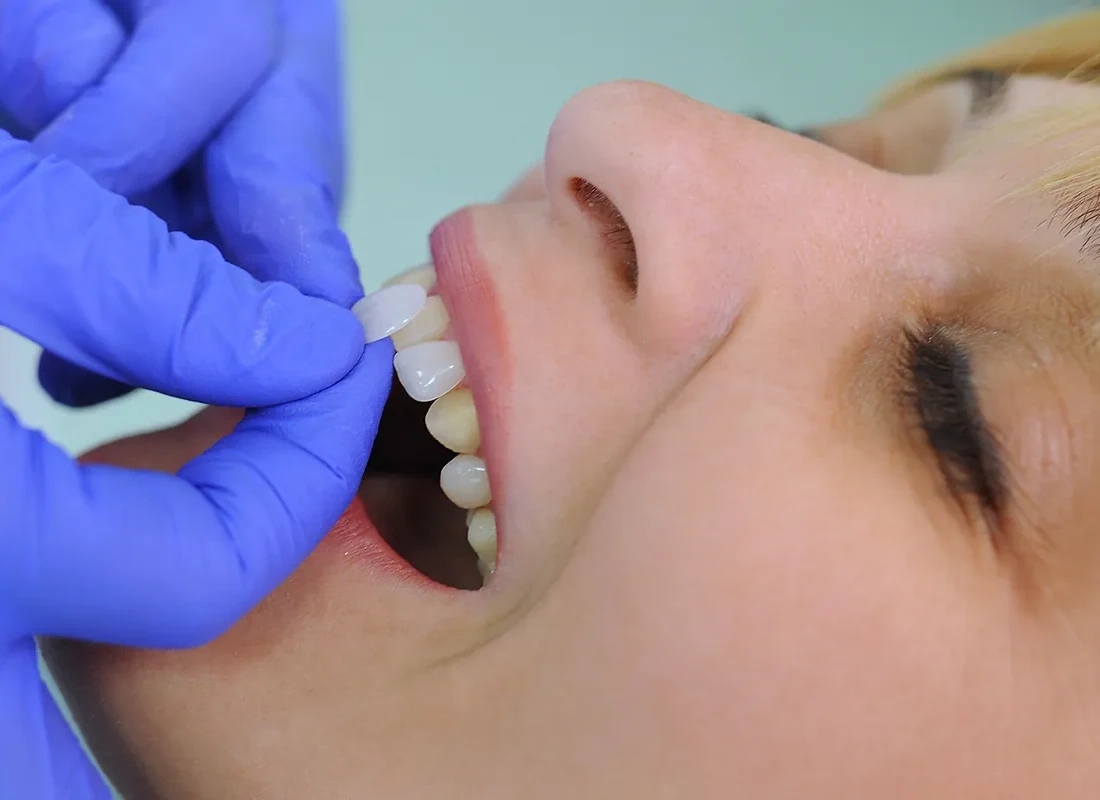
Porcelain veneers are thin, custom-made shells bonded to the front of a tooth to change its shape, shade or alignment. A dentist gives a personalized estimate after an exam, because the number of teeth and the care needed first differ from one person to the next.
Quick Answer
The cost of porcelain veneers depends on how many teeth are treated, the material and any care needed first, so a dentist gives a personalized estimate after an exam. Porcelain tends to cost more than composite because each shell is made in a dental lab. An itemized estimate makes quotes easy to compare.
Key Takeaways
- Porcelain tends to cost more than composite, while composite can need fewer visits.
- The number of teeth treated shapes the total, because each shell is made individually.
- Decay and gum disease get treated first, and that care may be quoted separately.
- Cosmetic work may not be covered by insurance unless it is deemed medically necessary.
- A written, itemized plan lets patients compare quotes for the same teeth and material.
What Makes One Quote Different From Another?
Two patients can leave with very different totals for the same material. Part of that is scope, since one veneered front tooth and a full row of eight are not the same job. The rest is everything around the shells, from preparation to the dental lab that makes them.
Each shell is made for a single tooth. According to MouthHealthy from the American Dental Association, a dentist prepares the tooth, takes an impression or a 3D scan, and sends it to a dental lab, where a technician makes the shell to fit. That work repeats for every tooth, so the number treated shapes the total directly.
The visits add to the cost too. Once the shell returns from the lab, the dentist places it to check the fit and shape, makes any adjustments, cleans the teeth and bonds it in place. It can take a few days to get used to a new shell, and a bite that feels off afterward should be reported to the dentist so it can be corrected.
Why Does Porcelain Cost More Than Composite?
Porcelain costs more because it takes more steps. The American Dental Association describes porcelain as strong, long-lasting and natural-looking, and says it tends to be the more expensive option. The process involves a lab-made shell, an impression or scan, and sometimes a temporary shell while the final one is made.
Composite is the other main type. It is built from tooth-colored filling material that is bonded and sculpted directly on the tooth, which can mean fewer visits and less enamel removed. Composite can be repaired more readily if damaged. It resists stains and wear less well.
A lower starting price does not always mean a lower long-term cost. A shell can chip, crack, wear down or loosen over time, and repair, re-bonding or replacement may cost extra beyond the original quote.
Which Costs Come Before Anything Is Bonded?
Healthy teeth come first. Most porcelain veneers require removing a thin layer of enamel from the front and sides of the tooth, so decay and gum disease get treated before anything is bonded. Placing shells over unhealthy teeth can worsen existing problems.
That earlier care may appear as its own line on an estimate, separate from the price of the shells. A clear quote lists it instead of folding it into one total.
Grinding can add cost too. People who clench or grind their teeth, or who have a deep overbite, may not be good candidates. When grinding is part of the picture, a protective guard may become part of the plan and part of the cost.
Will Insurance Help With the Cost?
Insurance may not cover veneers, because the work is considered cosmetic unless the treatment is deemed medically necessary. The plan’s benefits summary can help patients understand what may be covered.
Plans can word medical necessity differently, so the plan’s own wording decides. Calling the insurance company before treatment answers the question for that specific plan.
How Can Quotes Be Compared Fairly?
A fair comparison starts with the same scope on every estimate, meaning the same teeth, the same material and the same list of included steps. An itemized plan shows whether preparation, lab work, temporary shells, follow-up adjustments and a protective guard are included or billed on top. Without that breakdown, a low number can leave out pieces that appear later.
Price is not the only thing to compare. The ADA cautions that only a licensed dentist should place shells, because services from unlicensed individuals can carry risks of infection and nerve damage, and an unlicensed individual may place shells over unhealthy teeth.
How Can Patients Protect the Investment?
Shells last longer when a patient avoids biting fingernails or chewing hard objects and foods, uses mouth guards for sports, and limits coffee, tea and red wine, which can stain composite shells.
Brushing with fluoride toothpaste twice a day and cleaning between the teeth matters too, since cavities can still form under or around a shell.
Frequently Asked Questions
Do porcelain veneers need to be replaced?
A veneer can chip, crack, wear down or loosen over time, and a dentist may repair, re-bond or replace it. Those repairs may cost extra beyond the original quote, so ask what the estimate covers after the shells are placed. Avoiding hard foods and nail biting helps the shells last.
Can porcelain veneers be reversed?
Veneers that need enamel removed usually cannot be undone, because the dentist takes a thin layer from the front and sides of the tooth first. That is why healthy teeth matter before any shell is bonded. Composite can mean less enamel removed, and a dentist can explain which option fits.
Can veneer payments be spread out over time?
Payment options vary from office to office. Muse Dental Studio offers Cherry payment plans, and checking rates online takes about a minute without affecting a credit score. Ask the office which plan fits the estimate and how long the payments last.
Related Reading
About the Author
This post was reviewed by Dr. Fadi Tatari, DDS, who earned a fellowship at the Las Vegas Institute for Advanced Dental Studies (LVI). He focuses on cosmetic dentistry and dental sleep medicine and is certified in laser dentistry.
- If you want a personalized estimate, learn about dental veneers in Houston, TX or schedule a consultation.